
Free online invoicing software
with KSeF support
Expansion into foreign markets is a natural step in the development of many Polish e-commerce businesses and manufacturing companies. Selling to Germany, France or Czechia offers enormous opportunities, but also involves a maze of regulations that can be an insurmountable barrier for some business owners. Two concepts are crucial here and often keep accountants and business owners awake at night: VAT rates in individual countries and Intrastat thresholds.
Why is this so important? Because free movement of goods in the European Union does not mean there are no reporting obligations. On the contrary: the larger your operations, the more closely statistical and tax authorities examine your transactions.
What exactly is Intrastat, and when do you need to be concerned about it?
The Intrastat system collects information on trade in goods between European Union member states. Unlike VAT returns, these data mainly go to the Central Statistical Office and are used for statistical purposes. However, this does not mean they can be disregarded.The obligation to report in Intrastat arises when specified turnover thresholds are exceeded. Importantly, these thresholds are set separately for:
- Dispatches (WDT) – goods sent from Poland to another EU country.
- Arrivals (WNT) – goods brought into Poland from another EU country.
Many business owners forget that exceeding the threshold in one direction (for example, arrivals of raw materials) does not automatically require reporting in the other direction, unless that threshold has also been reached.

Accounting that understands your business
Leave your email address and receive guides supporting your business’s growth once a week

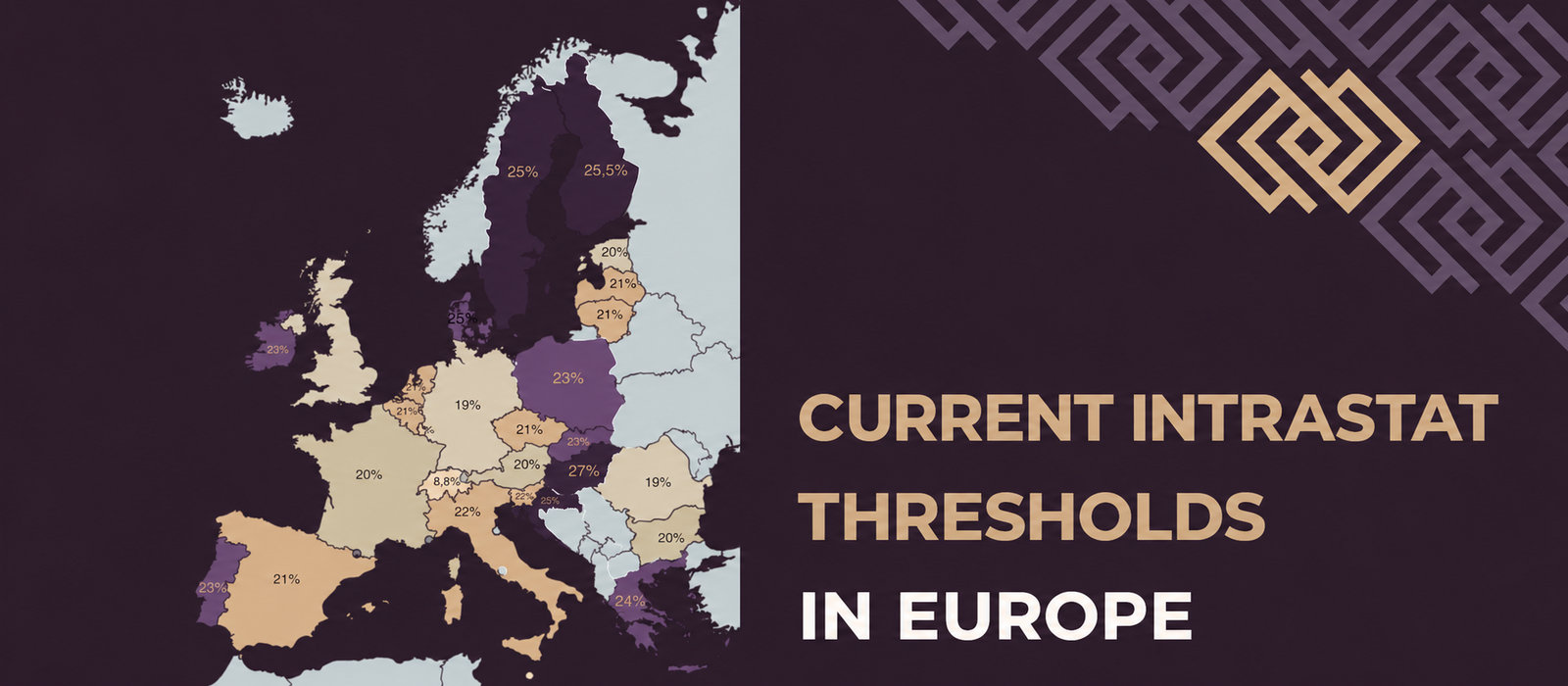
Map of VAT rates and Intrastat thresholds in Europe – as of 2025
When planning pricing policies in foreign markets, you need to consider local VAT rates. Differences between countries can be significant: from 17% in Luxembourg to as much as 27% in Hungary. This knowledge is essential not only for issuing invoices correctly but also for calculating margins when selling under a B2C model (for example, through the VAT OSS scheme).The map below illustrates the variation in rates across Europe. Darker areas indicate countries with a higher tax burden, which may signal that you should adjust your pricing strategy for that region.


Overview of Intrastat thresholds and VAT rates (Details)
Each member state sets its own thresholds above which businesses must report in Intrastat. Below, we present current data to help you determine whether your company is already subject to this obligation in the individual countries with which you trade.Remember that failure to report on time may result in substantial administrative penalties.
Thresholds usually change at the beginning of the calendar year, but updates may also occur during the year. Always verify the data at the source or consult an accountant before making key business decisions.

Interested in this article? Explore our accounting services and see how we can help:
Summary
Successful expansion into European markets requires not only an excellent product but also precision in VAT and Intrastat reporting. Monitoring changing rates and thresholds is the key to avoiding penalties and maintaining financial security. If you want to be sure that your business is growing in compliance with regulations, trust the TaxCoach experts. We will handle the bureaucracy so you can focus on building a global brand.

Interested in this article?
Enter your email address and once a week you will receive practical materials and tips to help you grow your business.

Book a free consultation
Grow your business with accounting combined with advisory services:

or