
Free online invoicing software
with KSeF support
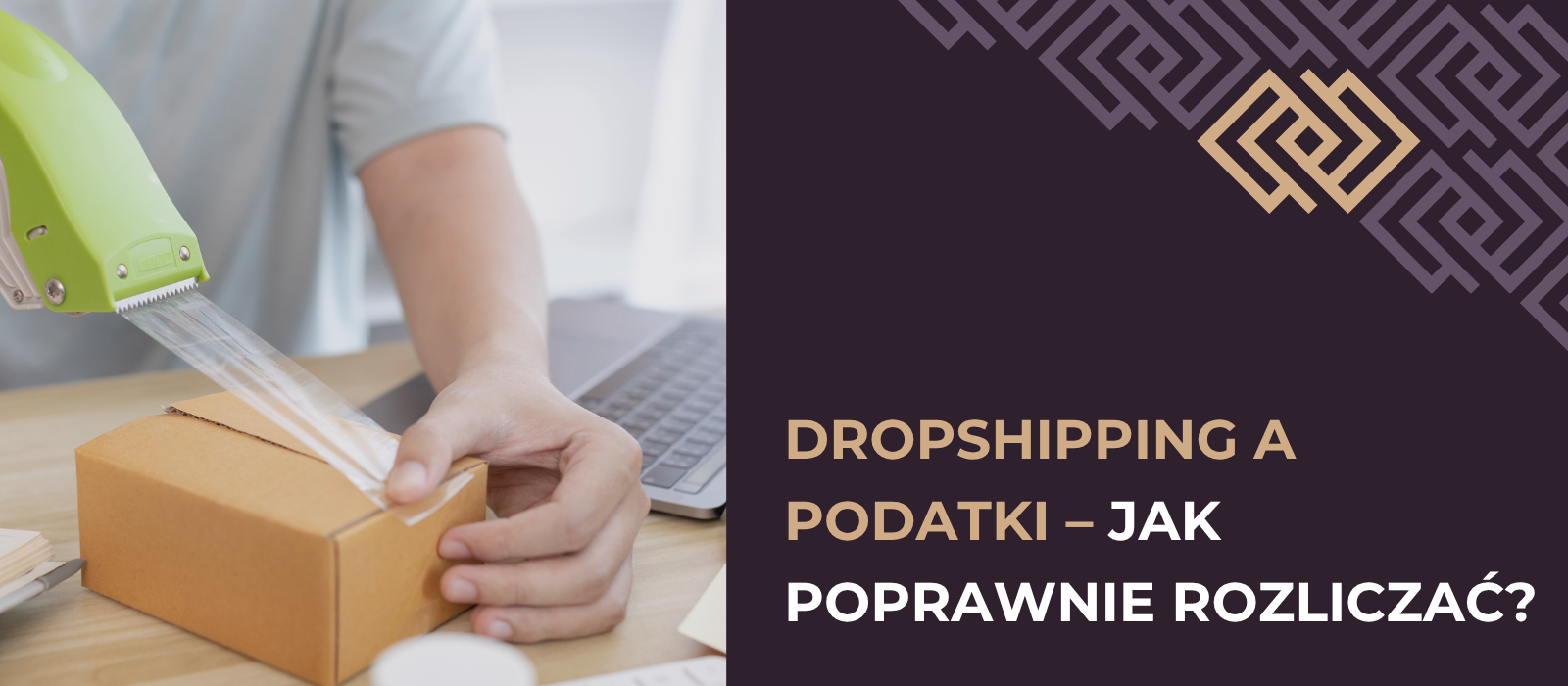
Dropshipping lets you start a business without major initial costs. However, its specific nature can make taxation complicated, especially when selling in several countries. We explain how to settle margins and VAT correctly in international trade.
Dropshipping and taxes: why is it so complicated?
In this trading model, you do not sell goods physically held in your warehouse. Instead, you act as an intermediary. The supply chain and determining who actually sells and where are therefore crucial. Correctly identifying where the tax obligation arises matters. Depending on the model, tax may be settled in Poland, another EU country or outside the Union.
The complexity also comes from at least three parties participating: you as seller or intermediary, a supplier, often abroad, and the end customer. Each relationship creates separate tax consequences. Correct classification requires detailed knowledge of domestic and foreign regulations. Tax authorities are increasingly examining dropshipping companies to verify that the declared transaction type matches its actual course.
As with other businesses, outsourced logistics requires choosing a taxation method. Income tax in dropshipping may follow general rules or lump-sum revenue taxation, but not every option benefits this business model. General rules are usually more advantageous when costs are substantial, including goods purchases, advertising, platform commissions, tools or logistics, because deductible costs can be recognised. Lump-sum taxation may be worthwhile mainly where costs are low and the cooperation model allows simpler revenue settlement.
At TaxCoach, we recommend detailed analysis of individual models before choosing an option. We also help choose the best solutions.

Accounting that understands your business
Leave your email address to receive weekly guides to help your business grow.

How do you settle the margin in dropshipping?
How should dropshipping revenue be settled? In many cases, the taxable amount is not the full order value but the margin, the difference between the sale price and the goods purchase cost. This is not a rule for every model, however. Settlement differs depending on whether you are intermediary or seller. An intermediary pays tax only on the difference.
Intermediary classification requires specific conditions, including that customers know the goods come from another entity and you only facilitate the transaction. If you are the final seller, revenue is the full customer payment, while the purchase cost from the supplier is deductible. Incorrect classification may understate or overstate the taxable amount, both creating a risk of consequences from the tax office.
Selling without warehousing requires proper sales records. You must know exactly which part of each transaction is your revenue and which is merely funds passing through. Errors can inflate tax and create problems during an accounts inspection.
VAT in dropshipping: what you need to know about settlements
The most complicated and important issue is where the customer is and where the goods are dispatched from. These two elements determine VAT settlement.
Sales to EU countries often use VAT OSS, a simplified solution allowing VAT from multiple states to be settled in one return. This is a major convenience but requires precision, especially when assigning rates and countries of consumption.
Remember that OSS becomes compulsory after the total EUR 10,000 threshold for sales to consumers in other EU countries is exceeded. Below it, your own country’s rate may apply. Above it, you must either register for OSS or separately for VAT in each country where you sell. For most dropshippers, OSS is considerably more convenient.
In practice, continuously monitor sales and correctly assign transactions to countries. OSS errors can result in corrections, interest, sanctions and even exclusion for two years.
Dropshipping from China: VAT and customs duty
Greater accounting challenges arise with imports from outside the EU, including China, where outsourced-logistics products often originate. Customs matters must be considered alongside VAT. Packages worth up to EUR 150 are currently still exempt from duty, although this is to change from 1 July 2026, with a flat EUR 3 charge per tariff item.
The charge applies to each separate tariff item in the customs declaration rather than the entire shipment. If a package contains products from different categories, the total may therefore be a multiple of EUR 3. This is temporary: from 2028, the EU plans to abolish the customs exemption entirely and apply standard rates to all shipments. For low-margin dropshippers, every additional charge directly affects profitability, so these changes should already be included in pricing calculations.
For cheaper products, IOSS allows VAT to be settled at the point of sale. This is convenient because the customer does not have to pay additional tax on receipt.
Duty and VAT in dropshipping: how to issue invoices
Sales documents must reflect the actual business model. Intermediaries invoice differently from final sellers. Imports also require correct settlement of customs charges. Errors most frequently arise here, particularly when data comes from several unintegrated sales systems. Working with us makes avoiding problems easier.
Invoicing in different currencies is another challenge. Sales to customers in different EU countries require correct conversion for VAT returns using the appropriate European Central Bank exchange rate. Conversion errors are among the most common discrepancies detected during tax inspections. Also consider National e-Invoicing System, KSeF, obligations, introducing new requirements for issuing and transmitting structured invoices.
An accounting firm for dropshipping: specialist support
Accounting for e-commerce, including dropshipping, requires understanding sales models and technology as well as regulations. Increasingly, businesses therefore choose our services. We organise taxes and implement suitable settlement arrangements. We ensure tax safety whether you operate inside or outside the EU.
Working with us removes the need to work out dropshipping settlements in every situation. You can be confident everything is clear and lawful, and focus on scaling sales.

Interested in this article? Explore our accounting services and see how we can help:
Summary
Identify whether you act as an intermediary or final seller, then match revenue recognition and invoices to that role. Customer location and dispatch origin affect VAT, while imports add customs duties. Reliable records and coordinated sales data help keep settlements consistent as operations expand.

Interested in this article?
Enter your email address and once a week you will receive practical materials and tips to help you grow your business.
Book a free consultation
Grow your business with accounting combined with advisory support:

or