
Free online invoicing software
with KSeF support
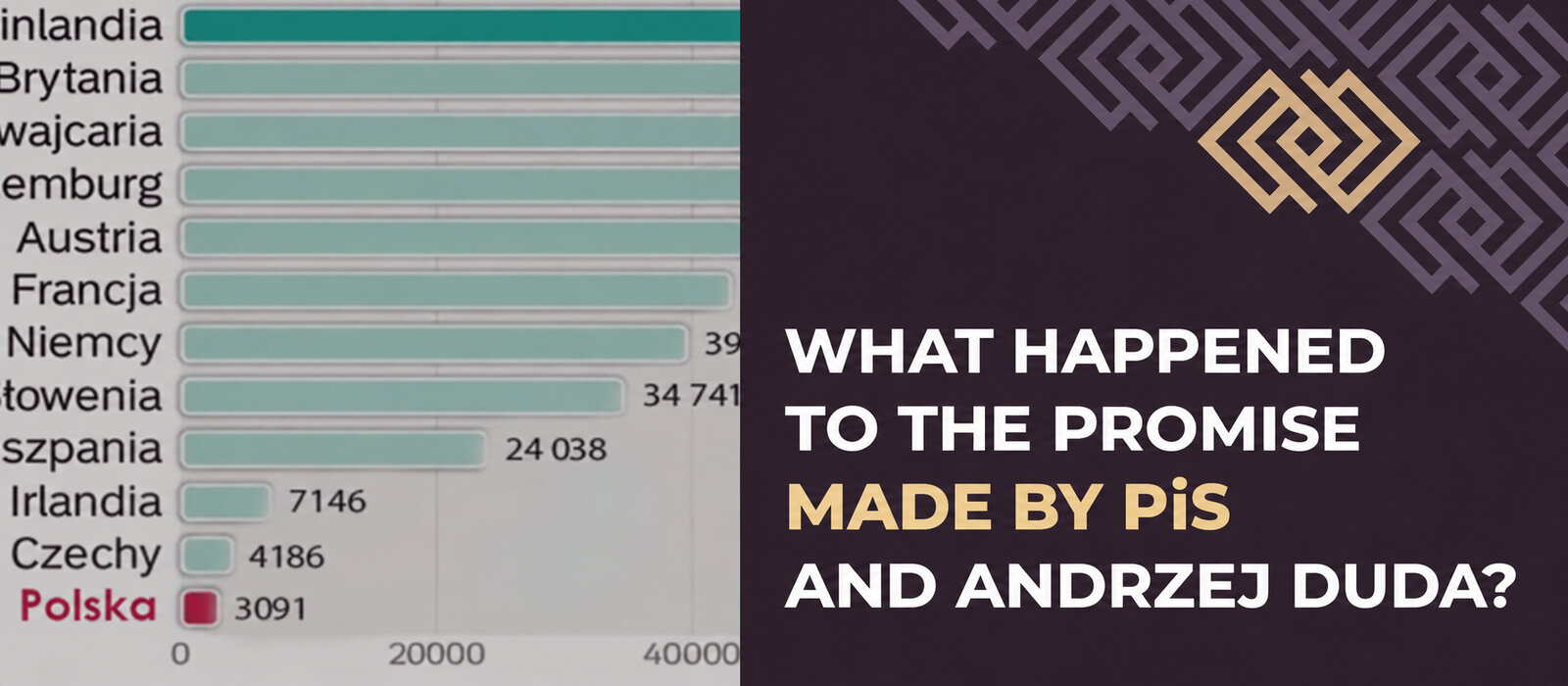
Poland’s tax-free allowance remains among the lowest in Europe. Our PLN 3,091 is a tiny fraction of what taxpayers have in Germany, France and Spain.
Four years ago, increasing the personal income tax-free allowance was one of the most popular, perhaps even the most important, election campaign topics. PiS and Andrzej Duda promised to raise it from PLN 3,091 to PLN 8,000 for all taxpayers, immediately after the election. The increase was expected to cost the budget PLN 17 billion. It was also ordered by the Constitutional Tribunal, which ruled in late 2015 that Poland’s allowance was too low: absurdly low compared with other countries using such a system, and low enough that even people earning less than the subsistence minimum must pay taxes. This violates the constitutional principle of social justice.

Subscribe to our newsletter
Leave your email address and receive guides supporting your business’s growth once a week

Since then, little has changed. People earning very little were indeed promised an PLN 8,000 allowance, but they are a very small group. The allowance falls as income rises. The vast majority still have PLN 3,091, while high earners have lost the allowance entirely.
Nor has our allowance been indexed for years. In other European countries, allowances are generally much higher and also indexed. Consultancy KPMG gathered tax-free allowance figures for several European countries and converted them to zlotys. Poland fares poorly: Germany almost PLN 40,000; France over PLN 43,000; Switzerland PLN 57,000; and the United Kingdom nearly PLN 61,000. Even countries closer to us have more: the Czech Republic almost PLN 4,200 and Slovenia almost PLN 35,000.
It is true that people on low incomes received a larger tax-reducing amount, but very few workers earn PLN 660 a month, and those are the people affected by this increase.
For more than 90% of taxpayers, nothing changed. Some high earners even lost the allowance altogether. They paid for its increase for low-income taxpayers.
The tax-free allowance has become something like a relief conditional on taxpayers meeting particular criteria. But a tax-free allowance is a tax-free allowance. Its design should be democratic. If it exists, all taxpayers should receive it. Raising it for a small group at another group’s expense is only a token gesture.
Our allowance is very low compared with other countries. Many have levels that look astronomically high from our perspective. We cannot afford that, yet even in the Czech Republic the allowance for all taxpayers is 30% higher.
Moreover, in many cases the gap is widening because many countries index allowances annually while ours has stood still for years. For taxpayers, this is a hidden increase in the burden. Some years ago the CenEA foundation calculated that freezing the allowance and other PIT limits would cost households at least an additional PLN 2.3 billion in each of the following years.
Interested in this article? Explore our services and see how we can help:
Our specialists can help you put this knowledge into practice.

Interested in this article?
Enter your email address and once a week you will receive practical materials and tips to help you grow your business.

Book a free consultation
Grow your business with accounting combined with advisory services:

or