
Free online invoicing software
with KSeF support
What is reinvoicing?
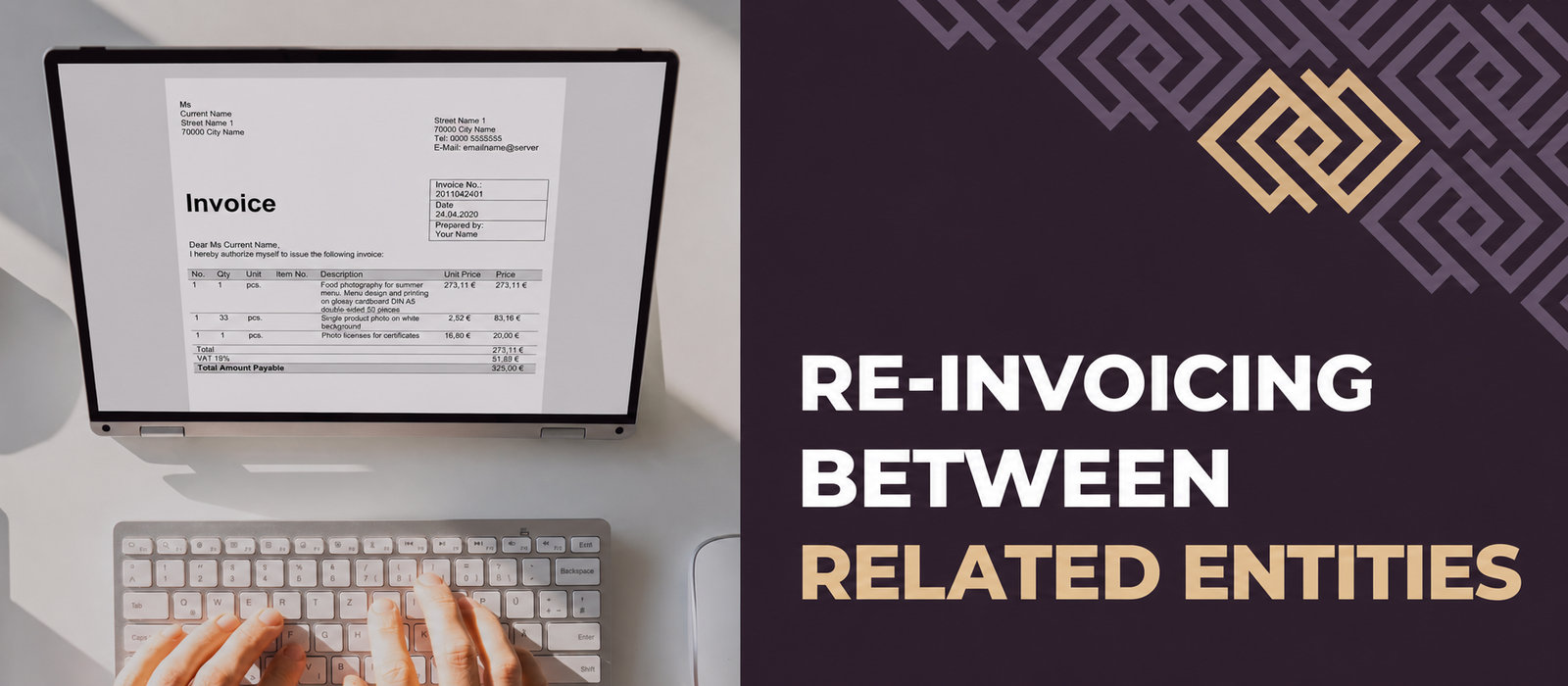
Unfortunately, this concept has no precise definition in tax law, but it can be described as transferring the cost of a service or goods purchased by one company to another. Rent is a good example: we rent premises to another entity. If the contract with the energy company is in our name, after receiving the invoice we can “reinvoice” the service to our customer.
Services can also be reinvoiced between related entities. In that case, all the rules on documenting transactions presented below still apply.
Article 8(2a) of the Act of 11 March 2004 on tax on goods and services (the VAT Act) says: “Where a taxpayer, acting in their own name but on behalf of a third party, participates in the provision of services, that taxpayer is deemed to have received and provided those services themselves.” Reinvoicing is therefore effectively the resale of previously purchased services or goods and thus a kind of transaction.

Subscribe to our newsletter
Leave your email address and receive guides supporting your business’s growth once a week

Under the Act of 15 February 1992 on corporate income tax (the CIT Act), taxpayers transacting with related entities must prepare tax documentation for transactions whose combined value exceeds EUR 50,000 if their revenue or costs in the year preceding the tax year exceeded EUR 2 million. Documentation must be prepared for the year of the transaction and the following year. Reinvoicing is thus part of the documentation, all elements of which are specified in that Act.
The Act also states: “Related entities must prepare local transfer pricing documentation for the financial year, setting out the relationships between them. Its purpose is to show that transfer prices were set on terms unrelated entities would have agreed. In other words, the purpose is to show the transaction's market character. The obligation to prepare local transfer pricing documentation depends on the value of the controlled transaction in that financial year.” To check exactly which amounts to consider, see Article 11 of the Corporate Income Tax Act.
A reinvoice need not look identical to the original purchase document, but it must contain all information required on a VAT invoice, as stated in Article 106e of the VAT Act.
When reinvoicing, it is worth seeking advice from a reliable accounting firm. TaxCoach can help compile the tax documentation and choose the best taxation method for you.
If this article interested you, explore our accounting services and see how we can help:
Our specialists can help you put this knowledge into practice.

Interested in this article?
Enter your email address and once a week you will receive practical materials and tips to help you grow your business.

Book a free consultation
Grow your business with accounting combined with advisory services:

or